Nine a.m. on May 6, and I stood in a stranger's side yard in rubber boots while a man named Curt from Alpine Water Systems ran a hose off the well spigot into a five-gallon bucket and counted seconds under his breath. Flow test. The lender's last condition. Eleven point two gallons a minute, sustained, thirty minutes, written on a carbon-copy ticket that weighed almost nothing and had swallowed three weeks of my life.
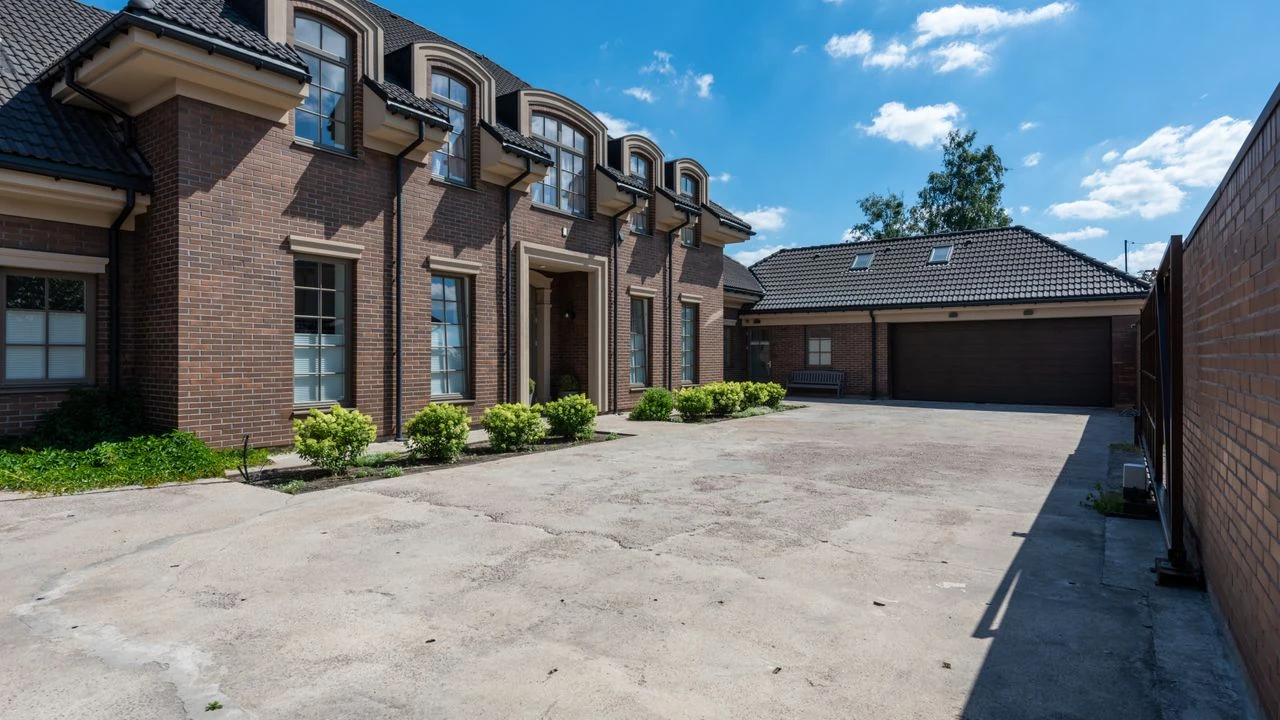
The house was a 1948 farmhouse outside town, three bedrooms, a porch that creaks, listed at $342,000, and we had $12,000 in earnest money sitting with the title company and a rate lock with Wells Fargo that expired May 31. Marta wanted the acre. Our daughter wanted the barn cats, both litters. I wanted to stop explaining to relatives why a city family buys a well. Nobody tells you a shared well is a tiny corporation you inherit.
The scary part was never the bucket. The scary part sat in a folder at the county records office: a shared well agreement signed by four couples in October 1994, and the recorded copy was missing page four, the page with the fourth couple's notarized signatures. The underwriter's email used the exact phrase "unable to clear title," and my broker read it to me twice on speaker cuz I kept asking. The signature existed. It was stapled, by some clerk in 1994, to the wrong deed.
the house, the well, the fine print
We found the well situation in the listing fine print on day two, one line in the disclosures: "shared well serving 4 residences." The seller's agent emailed us a PDF of the agreement, and I dug into it that night at the kitchen table, 210-foot drilled well, submersible pump replaced in 2011, every household responsible for 25 percent of electric and maintenance, repairs reimbursed against receipts from the shared fund. The PDF had pages 1, 2, 3, and 5. I figured out much later that this was not a scanning accident on their end, cuz this partial copy was all anybody had, including the county.
four houses, one pump
The four houses were ours, the Hendersons at the road, a retired couple at the corner, and the yellow house where Vivian has lived since 1979. The agreement ran six pages in its complete form, and it reads like what it is, four families in 1994 pretending to be lawyers, but the bones are good: cost splits at 25 percent each, a $40 quarterly maintenance contribution, a 48-hour notice rule for any contractor entry, and a paragraph that says the well obligations run with the land, which is the phrase Wells Fargo would later fixate on. The 2011 pump replacement cost $4,800 split four ways, $1,200 per household, and Vivian kept the receipt.
what Wells Fargo asked for
Our broker Kellan laid out the underwriting conditions one by one: one, a shared well agreement that is recorded, so the burden and the benefit attach to the properties and survive any sale; two, a potability test showing coliform absent and nitrate under 10 milligrams per liter; three, a sustained flow test adequate for four households, no fixed number in the guidelines, underwriter's judgment. The problem was item one. The recorded document at the county, book 1188, page 209, had a hole in it, and the underwriter does not clear title conditions on the strength of a kitchen-table PDF, no matter how good the bones are.
the missing page four
The clerk pulled the microfilm for us and zeroed in on the gap in about four minutes: pages 1, 2, 3, then 5, then the recording stamp. Page four held the fourth signature block, the one belonging to the previous owners of our own house, meaning our purchase traced straight back to the missing page. The clerk could not add anything to a recorded document, nobody could, and the fix paths were ugly: re-record a new agreement with all four current households signing, or find an original. Three of the four households were easy. The fourth signature belonged to a man who had died in 2016, and his widow was 84.
the widow with the filing cabinet
Vivian answered the door of the yellow house holding a cordless phone and did not seem surprised to see strangers with paperwork. Harold had signed in 1994, Harold kept everythin', Harold died in 2016, and the filing cabinet in the back hallway kept goin' without him. The original agreement was in a manila folder, all six pages, all four signature blocks, Harold's handwriting steady as a form. She signed a consent to re-record at her own kitchen table, we paid a notary $10 at the UPS Store, and she told us about the drought summer of 2012 while the notary stamped, and about Harold's rule that nobody waters lawns from the well, ever. The county took our $34 recording fee on May 19.
nine a.m., five-gallon bucket
Curt ran the flow test the same week, 30 minutes of continuous draw with refill timing, and the bucket never emptied: 11.2 gallons a minute sustained, which he says is a strong number for a 210-foot hole in this county. Potability came back coliform absent, nitrate 1.8 milligrams per liter, total cost $285 for both tests, and the county health department stamped the results into the same file our re-recorded agreement would live in. He wrote GOOD WELL on the carbon ticket and underlined it twice. Marta took a photo of the bucket because that is the kinda thing we do now.
the underwriter's three-day silence
Then came three days of nothin' from underwriting, which is three days long enough to age you. Kellan called finally and translated: the file had cleared the recording condition, and the remaining question was whether the agreement "burdens" our property, which it does, on purpose, by binding us to 25 percent of a pump four other families rely on. He sent the statute cite and a one-paragraph cover letter explaining that the burden is the feature, the whole reason the lender wants the document recorded at all. Conditions cleared May 22. Escrow extended once, no fee, cooperative heirs on the seller's side because they wanted out before the June tax bill.
the checklist now taped inside my cabinet
What I would tell anyone falling for a farmhouse: order the county well and water file on day one, before the inspection, not after, cuz the file is where deals go to die quietly; ask who physically holds originals of anything older than you are; schedule flow and potability tests inside the appraisal window, not behind it; and assume every 30-year-old handshake between neighbors is missing one page somewhere in a basement. Total cost of our detour: $10 notary, $34 recording, $285 tests, one tank of gas, and about nine years of life in three-day increments. Cheap, considering.
the folder, closed
We closed May 29. The carbon-copy ticket lives in the same folder as the agreement now, complete, stamped, scanned, boring, all four signature blocks present and a consent signature from a woman who kept a filing cabinet running for a man who kept everything. The barn cats had their litters anyways. Nine a.m., rubber boots, Curt counting under his breath felt like the finish line that morning, and it was honestly the middle. The folder is what closed the deal. That is it. That is the whole well.