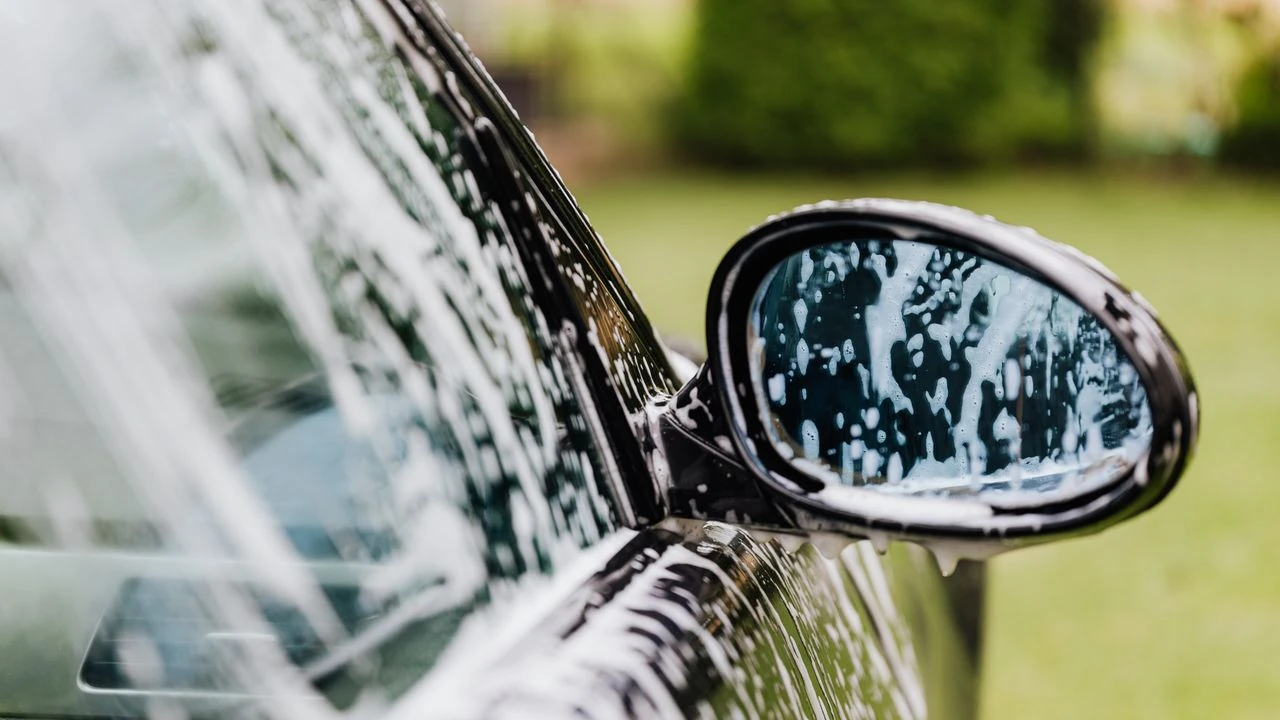
Six forty in the morning at a Mobil station on Erie Boulevard, gas pump 4, and my windshield began making a sound like a plastic fork dragged across a baking sheet. November 14, twenty-eight degrees, salt haze drying white on the glass. The wipers skipped, stuttered, and wiped three clean stripes with smeared streaks between them. I wiped the glass with my glove. That made it wider.
The stakes were ordinary and real: a forty-five minute commute down Route 690 with a nine o'clock deadline, and a carpool neighbor in the passenger seat who already thinks I baby this Civic like a race car. Blurry glass at 65 miles an hour in plow spray is not a slight inconvenience. It is the road disappearing, every time a plow passes, on schedule, for five straight months.
The odd part: those blades were eight months old and cost $37.99 for the pair, Bosch Icons, the set the parts store counter guy swore would go "a solid year, easy." They did not go a solid year, and after I dug into why, I stopped blaming Bosch entirely. The reason sits in what Central New York does to rubber between October and April, and the proof was idling in my own driveway: my neighbor swaps his blades twice a year on two fixed weekends, and his windshield is always clear.
the $38 pair from March
I bought them on March 8, 2024, during a tax-season sale, 24-inch driver and 18-inch passenger for the Civic. Premium beam blades with the graphite coating and the aerodynamic spoiler, boxed like electronics. At the time I did the usual consumer math and called it smart: spend double, get double the life. Twelve months of clear glass for $38 read like a bargain against $12 junk blades twice.
That math had one flaw. It assumed the wear rate was constant, and in a salt state it is not, cuz the stuff that eats the edge is not rain and it is not friction.
650,000 tons of salt
New York spreads on the order of 650,000 tons of road salt in a normal winter, and a good chunk of that lands on the roads I drive. Plow trucks pre-wet it with brine so it sticks. At 55 miles an hour, a truck throwing that mix puts up a fine mist that coats your whole car, windshield included, and the wipers smear it back and forth across the blade edge on every pass. My driveway puddle dries chalk-white by February. Everythin' the mist touches, the blades touch too.
the edge looked chewed
In December I sat at the kitchen table with the dead pair and a magnifying glass, cuz I wanted to see the failure with my own eyes before I spent money again. The rubber lip was not worn. It was chewed — nicked, cracked, and jagged, tiny serrations like someone had cut it with pinking shears, plus a stiffened patch about four inches long where it had frozen to the glass once and torn free. Chatter is exactly what that edge does. It hops instead of wipes.
November, not January
The month that kills blades is November, not January, which took me years to see. November is when blades that sat through a summer of heat, ozone, and UV get their first hard workout on frosted glass, right as the first heavy salt cycles start. Ice scrapers do damage too, since half of us run the wipers across an iced-over windshield to clear slush and drag frozen rubber over dry ice. Six months of that cycle is the honest lifespan here. A March install is dead by November. A November install is dead by May. The one-year claim on the box was written somewhere the plows do not run.
the $11 pair
The replacement I chose that December was the opposite of premium: a house-brand conventional pair on sale for $11.98. Metal frame, plain rubber, nothing aerodynamic about it. It wiped better than the dying Icons from the first pass, because a fresh cheap edge beats a dead expensive edge every time. I stopped pretending there is a durability tier in a salt state. There is just fresh rubber and old rubber.
the rag and the jug
One habit stretches even that six months to its full length. Once a month I lift the blades off the glass and wipe the edges down with a rag wetted in washer fluid, the $3.29 gallon of minus-25 stuff, which pulls the salt film and grit off the rubber in about ninety seconds a side. I top the reservoir afterward. That is the entire maintenance program, and it is the difference between blades that chattered in month four and blades that were still quiet in month six.
May and November, on the phone calendar
I have two recurring reminders now, second Saturday of May and second Saturday of November. Buy two pairs at once when they are on sale, keep the spare pair in the trunk, and swap in twenty minutes in my own driveway with no tools at all. Annual cost lands around $24. The $38 premium pair was costing me more per clear month, and it still quit early. I sat with the receipts one evenin' and let that number sting for a while.
the glove test
Between swaps there is a thirty-second check I run at every gas fill-up. After the pump clicks off, flick the washers and listen. A healthy blade glides silent. A dying one chatters, squeaks, or leaves arc-shaped streaks, and any of those means replace it now, not eventually. You catch a failing blade at a gas station the same way you catch a failing tire, by paying attention once a week.
This past November 8, a Saturday, I swapped in the fresh pair on the pavement outside my building, one week before the salt season honestly opened. November 14 came around again this year, same Mobil, same pump 4, six forty in the dark. Clear glass, no fork-on-pan noise, gloves stayed dry on my hands instead of on the windshield. Six months, twice a year, about $24. That is it. That is the whole system.